



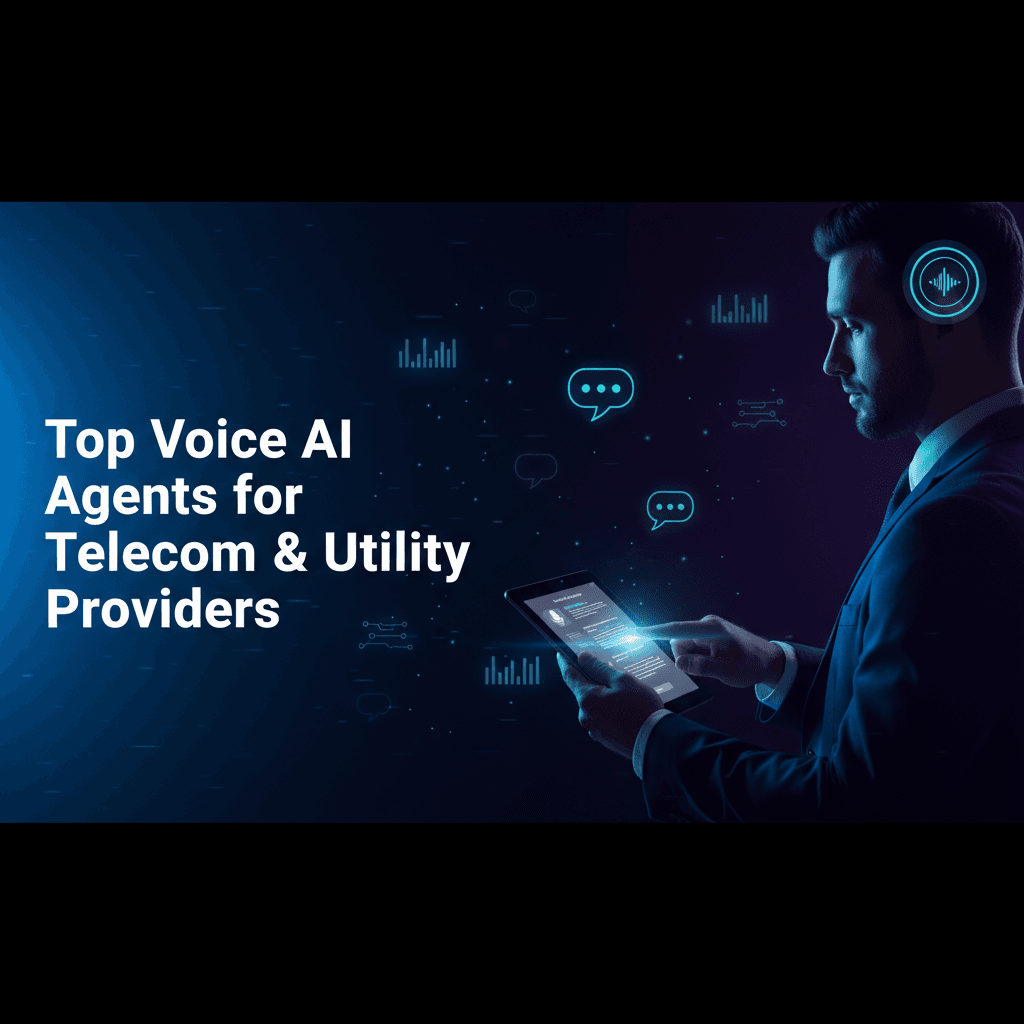
In today's rapidly evolving digital landscape, telecom and utility providers face immense pressure to deliver exceptional customer service while managing high call volumes and complex inquiries. The solution? Advanced voice AI agents. These intelligent systems are transforming how companies interact with their customers, offering unparalleled efficiency, accuracy, and personalization. This article delves into the top voice AI agents specifically designed for the unique challenges and opportunities within the telecom and utility sectors, exploring how they can revolutionize your customer experience and operational efficiency.
Why Voice AI Agents are Crucial for Telecom and Utility Providers
Telecom and utility companies operate in highly regulated environments with a constant need to manage customer expectations around service reliability, billing, and support. Traditional call centers often struggle with long wait times, agent burnout, and inconsistent service quality. This is where voice AI agents for telecom companies and voice AI agents for utility providers step in as game-changers. They offer a scalable, always-on solution that can handle a vast array of customer interactions, from routine inquiries to complex problem-solving.
Key Features to Look for in Voice AI Agents
When evaluating the best AI voice agents for contact centers in these industries, several critical features stand out:
1. Carrier-Grade Reliability and Low Latency
For industries where service continuity is paramount, a low-latency voice AI platform is non-negotiable. Customers expect seamless, natural conversations without noticeable delays. Carrier-grade voice AI solutions ensure high availability, robust performance, and integration with existing telephony infrastructure, making them ideal for high-volume environments.
2. Specialized Use Case Handling
The most effective AI agents are those tailored to specific industry needs. Look for solutions that excel in areas like AI voice bots for billing inquiries, handling payment processing, account updates, and detailed explanations of charges. For utilities, an AI outage notification voice assistant is invaluable, providing real-time updates and automatically escalating critical issues. These specialized capabilities are at the core of effective telecom voice automation software and utility customer service voice AI.
3. Multilingual and Omnichannel Support
Serving diverse customer bases requires robust multilingual voice AI for customer support. The best platforms can seamlessly switch between languages and maintain context. Furthermore, integration across various channels (voice, chat, web) ensures a consistent customer journey, a cornerstone of modern telecom customer experience automation.
4. Compliance and Security
Regulated industries demand stringent adherence to data privacy and security standards. Voice AI for compliance-heavy call centers must offer robust encryption, data anonymization, and audit trails to meet requirements like GDPR, CCPA, and industry-specific regulations. An enterprise voice AI for regulated industries ensures that all interactions are handled securely and compliantly.
5. Seamless Integration and Scalability
The chosen voice AI solution should integrate effortlessly with existing CRM systems, billing platforms, and contact center infrastructure. Scalability is also key, allowing the system to handle fluctuating call volumes efficiently. This is vital for effective AI call center automation for telecom and utility providers.
Top Voice AI Agents for Telecom and Utility Providers
While specific vendor recommendations can vary based on unique business needs, several platforms consistently stand out for their capabilities in the telecom and utility sectors:
Google Contact Center AI (CCAI)
Google's CCAI offers powerful natural language understanding (NLU) and speech-to-text capabilities. Its Dialogflow ES and CX platforms are highly customizable, making them suitable for complex telecom voice automation software and utility customer service voice AI. It supports voice AI for inbound and outbound calls, agent assist, and virtual agents, with strong multilingual support.
Amazon Connect with Contact Lens
Amazon Connect is a cloud-based contact center service that integrates seamlessly with AWS AI services like Lex (for conversational AI) and Contact Lens (for analytics). This combination provides robust capabilities for AI call center automation for telecom, including sentiment analysis, real-time transcription, and agent assistance, ensuring a comprehensive solution for telecom customer experience automation.
Genesys Cloud CX
Genesys offers a comprehensive CX platform with integrated AI capabilities. Their voice bots are designed for complex interactions, making them ideal for AI voice bots for billing inquiries and handling service-related issues. Genesys focuses on blending AI with human agents for optimal outcomes, providing a strong solution for enterprise voice AI for regulated industries.
Nuance Conversational AI
Nuance has a long-standing reputation in speech recognition and conversational AI. Their solutions are particularly strong in highly regulated industries, offering advanced security and compliance features. This makes them a top contender for voice AI for compliance-heavy call centers and for deploying sophisticated AI outage notification voice assistant capabilities.
IBM Watson Assistant
IBM Watson Assistant provides a flexible and scalable platform for building AI-powered virtual assistants. Its robust NLU capabilities and enterprise-grade security make it suitable for complex voice AI agents for telecom companies and voice AI agents for utility providers, especially for integrating with existing IBM ecosystem solutions.
Conclusion
The adoption of best voice AI agents for telecom and utility providers is no longer a luxury but a necessity for maintaining competitive advantage and delivering superior customer experiences. By carefully evaluating solutions based on their carrier-grade reliability, specialized use case handling, multilingual capabilities, compliance features, and integration prowess, companies can select the right partner to transform their contact center operations. Investing in a robust low-latency voice AI platform and carrier-grade voice AI solutions will not only streamline operations but also foster greater customer satisfaction and loyalty in these critical industries.
Frequently Asked Questions (FAQ)
What are the primary benefits of using voice AI agents in telecom?
Voice AI agents for telecom companies offer numerous benefits, including reduced call wait times, 24/7 customer support, automation of routine inquiries (like billing and account changes), improved agent efficiency by handling first-level support, and enhanced customer satisfaction through consistent and personalized interactions. They are crucial for telecom customer experience automation.
How do voice AI agents assist utility providers during outages?
An AI outage notification voice assistant can automatically handle a surge in calls during outages. It can provide real-time updates on outage status, estimated restoration times, and safety information. This offloads human agents, allowing them to focus on critical or complex cases, significantly improving utility customer service voice AI during emergencies.
Can voice AI agents handle complex billing inquiries?
Yes, advanced AI voice bots for billing inquiries are designed to handle a wide range of billing questions. They can access customer account information, explain charges, process payments, set up payment plans, and clarify usage details. For more complex or sensitive issues, they can seamlessly transfer the customer to a human agent with full context, ensuring smooth service.
What is meant by 'carrier-grade' voice AI solutions?
Carrier-grade voice AI solutions refer to systems built to meet the rigorous demands of telecommunications networks. This implies high reliability, scalability, security, and low latency, ensuring seamless performance even under extreme load. These solutions are designed for continuous operation and robust integration with existing telecom infrastructure, making them ideal for enterprise voice AI for regulated industries.
How important is multilingual support for voice AI in these sectors?
Multilingual support is extremely important, especially for telecom and utility providers serving diverse populations. A robust multilingual voice AI for customer support ensures that all customers can receive assistance in their preferred language, leading to higher satisfaction and better accessibility. It expands the reach and effectiveness of the AI agent, providing equitable service to a broader customer base.